
Connecting with Your Teen Through Their Love Languages
By Quinandria Lee, Ed.S., LCMHC, NCC
What Are Love Languages?
Love languages are the different ways people express and receive love. The five main types are: quality time, words of affirmation, receiving gifts, physical touch, and acts of service.
Understanding your teen’s love language can be a powerful way to strengthen your connection—
especially during a time when they’re looking for validation from the world around them.
This insight can help you better understand your teen and recognize the ways you’re already showing love.
Love languages are the different ways people express and receive love.
- Quinandria Lee
First Steps
1. YOU AND YOUR TEEN COMPLETE THE QUIZ!
https://www.5lovelanguages.com
2. REVIEW RESULTS
Their top two love languages are their primary ways to receive and give love.
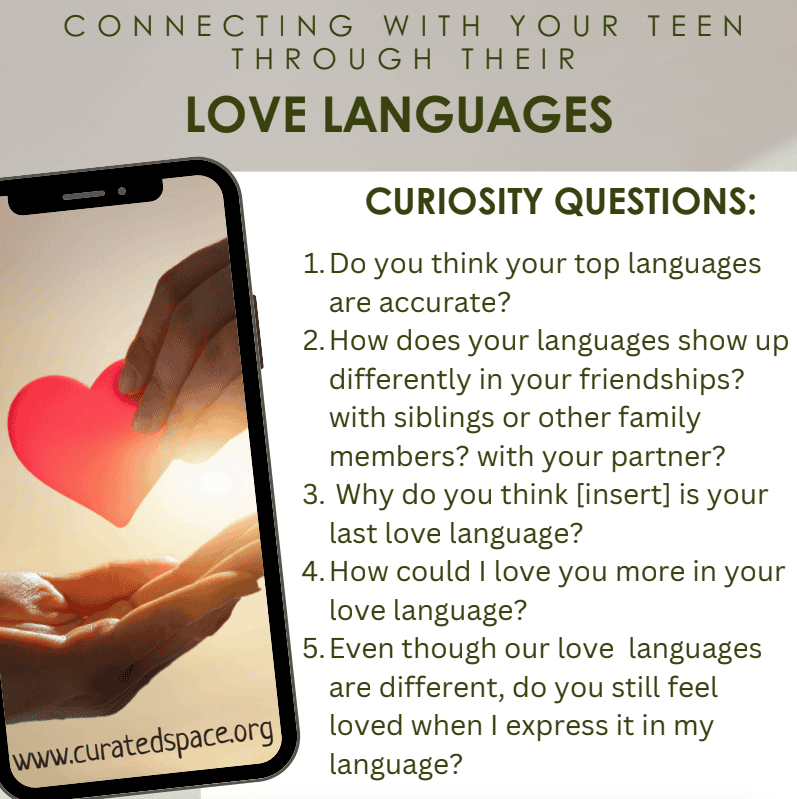
3. PRACTICE CURIOSITY
Utilize the questions below.
Ways To Speak Your Teen's Love Language
1. WORDS OF AFFIRMATION
- Use encouraging phrases often
- Praise them in front of others
- Saying “I love you” often
- Notes/texts expressing your love
- Recognize their effort (not just
accomplishment)
2. ACTS OF SERVICE
- Cook their favorite meal/treat
- Work on projects together
- Pick them up on time
- Helping them get organized
- Ask them “how can I make your day better?”
3. QUALITY TIME
- Give them your full, undivided attention
- Spend one on one time together
- Make eye contact when they’re speaking
- Intentional conversations without phones
- Be curious about their day and what’s happening in their world
4. PHYSICAL TOUCH
- Hugs and kisses
- Snuggle on the couch while watching a movie
- Make up a handshake
- Do their hair as a routine
- Any positive non-verbal display of
affection
5. GIFTS
- Small, inexpensive gifts for a reward
- “This made me think of you” gift
- Gifts you know they would like
Quinandria Lee is a Licensed Clinical Mental Health Counselor (LCMHC), former Middle School Counselor and CEO of Curated Space Counseling and Consulting, LLC. With four years in private practice and five years of experience working in education as a K-12 School Counselor, she has experience working with a demographically diverse population of clients.
Quinandria is passionate about working in the mental health space to curate safe spaces for minority children, women, and men to have their voices heard, validated, and respected while destigmatizing the idea of therapy.
Spread the word
Medical Disclaimer: All content found on the HER Health Collective Website was created for informational purposes only and are the opinions of the HER Health Collective experts and professional contributors. The Content is not intended to be a substitute for professional medical advice, diagnosis, or treatment. Always seek the advice of your physician or other qualified health providers with any questions you may have regarding a medical condition. Never disregard professional medical advice or delay in seeking it because of something you have read on this Website. If you think you may have a medical emergency, call your doctor, go to the emergency department, or call 911 immediately.
