
Sex Ed 101: What We Weren’t Taught and Why It Matters Now
By Jordan Seward, RDN
At some point in adulthood, many women have a quiet realization: I don’t actually understand how my body works.
It might happen when your daughter gets her first period and looks at you for answers.
It might happen when you’re trying to get pregnant again, and suddenly everything feels more complicated than it did before.
Or it might happen when your sleep, mood, energy, or cycle start to shift, and you realize you’re not sure what’s normal anymore.
Most of us were taught just enough about our bodies to avoid pregnancy, BUT we weren’t taught how to understand them, listen to them, or work with them across different seasons of life. And now, many of us women find ourselves filling in those gaps later, often while trying to support others at the same time.
This is Sex Ed 101 → the version we actually needed 😉
What Most of Us Learned (And What Was Missing)
Traditional women’s health education focused on:
- Anatomy
- Periods as something to “deal with”
- Pregnancy prevention
- A lot of silence around how hormones actually affect daily life
What was often missing:
- How the menstrual cycle works as a whole
- Why energy, mood, sleep, and focus change throughout the month
- How stress, food, sleep, and recovery influence hormones
- What’s normal at different life stages and when support matters
Many women move through life believing their bodies are unpredictable or working against them. In reality, it’s usually communicating, just without a shared language
When you understand how your cycle works, your body feels less confusing → and decisions feel more grounded.
Jordan Seward, RDN
Why Understanding Female Hormone Health Matters at Every Age
Understanding your cycle isn’t just for teenagers learning about periods. It matters at every stage of life.
Cycle literacy helps us:
- Feel more confident explaining puberty and periods to our children
- Make sense of fertility, contraception, and cycle changes
- Understand postpartum recovery and hormonal shifts
- Navigate perimenopause with context instead of fear
- Recognize patterns instead of assuming symptoms are random
When you understand how your cycle works, your body feels less confusing → and decisions feel more grounded.
The Menstrual Cycle, Simply Explained
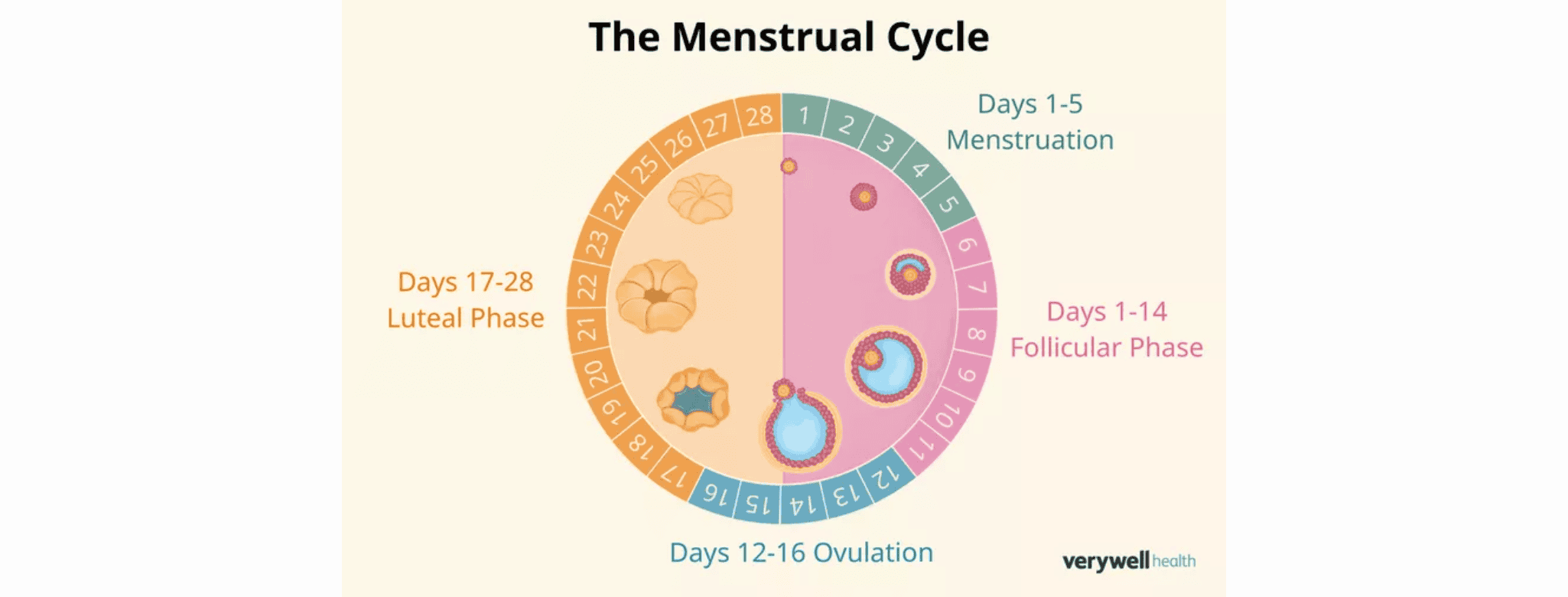
Your menstrual cycle isn’t just your period. It’s a monthly rhythm guided by communication between your brain and ovaries, and every woman’s communication looks a bit different, but at a high level, here is what’s likely happening.
At a high level:
- Estrogen rises in the first half of the cycle and supports energy, focus, confidence, and ovulation.
- Ovulation is a central event, not just for pregnancy, but as a marker of overall hormonal health.
- Progesterone rises after ovulation and supports sleep, calm, and nervous system stability.
- If pregnancy doesn’t occur, progesterone falls and your period begins.
Hormones aren’t meant to be constant. They’re meant to rise and fall. When that rhythm is supported, cycles often feel more predictable, and the symptoms YOU experience feel more manageable.
Why Things Can Start Feeling “Off”
Hormonal shifts don’t only happen at one age or stage. They can show up:
- After stopping birth control
- During postpartum recovery
- With fertility changes
- During periods of high stress or poor sleep
- As part of the natural transition toward perimenopause
Common experiences include:
- Sleep disruption
- Mood changes or increased anxiety
- Lower stress tolerance
- Changes in energy, focus, or motivation
- Cycles that feel less predictable
These changes aren’t signs that something is “wrong.” They’re often signs that your body’s needs have shifted.
What You Can Do to Support Hormones
Supporting hormone health doesn’t require perfection or complicated protocols. Foundations matter more than hacks – and they apply whether you’re caring for your own hormones or helping your daughter through tough cycles.
A few places to start:
- Notice patterns, not perfection: Pay attention to when you feel your best and most depleted – and help your daughter do the same. Start to ask yourself out loud, “ Where am I in my cycle? What are my strengths? What are my weaknesses?” This could look like noticing when sleep is harder, emotions feel bigger, or energy dips during the month. This could also be recognizing when you are more productive or tolerant of stress during the month. Awareness builds trust and reduces fear.
- Eat regularly and enough: Skipping meals or under-eating sends stress signals the body doesn’t ignore. Regular meals with protein, carbs, and fats support hormone signaling for both growing bodies and adult ones, especially during puberty and menstruation.
- Protect sleep when possible: Hormones coordinate best when the body feels safe and rested. Sleep disruptions often make periods feel heavier, moods more reactive, and stress harder to manage. Supporting consistent sleep routines benefits everyone in the house.
- Support the nervous system: Small moments of pause, breath, and sunlight add up. Modeling regulation, stepping outside, slowing down, and taking a breath teaches your daughter that rest is part of health, not something to earn.
These aren’t “fixes.” They’re signals to the body that it’s supported, and they create a foundation for calmer cycles, better resilience, and more confidence at any age.
A Different Way to Look at Women's Health
Women’s health education doesn’t stop at puberty. Your body keeps changing, hormones, cycles, fertility, and menopause, and most of us were never actually taught any of it.
Let’s rewrite that!
About the author. Jordan Seward is a registered dietitian with Katherine Andrew Nutrition, passionate about helping women in their fertility years feel more at home in their bodies. I specialize in functional nutrition for hormone health, fertility, and digestion, working with women who are navigating infertility, PCOS, thyroid issues, weight fluctuations, irregular cycles, or persistent bloating.
For more information on Jordan’s training, approach and services, visit: https://www.katherineandrew.com/ or @katherineandrewnutrition
Spread the word
Medical Disclaimer: All content found on the HER Health Collective Website was created for informational purposes only and are the opinions of the HER Health Collective experts and professional contributors. The Content is not intended to be a substitute for professional medical advice, diagnosis, or treatment. Always seek the advice of your physician or other qualified health providers with any questions you may have regarding a medical condition. Never disregard professional medical advice or delay in seeking it because of something you have read on this Website. If you think you may have a medical emergency, call your doctor, go to the emergency department, or call 911 immediately.
