The Season Is Already Changing. Your Routine Should Get to Change With It.

By Sarah Parise, Wellness & Accountability Coach for Moms
I’ve spent over 20 years helping overwhelmed moms build health habits that actually survive real life, not just the version of life they wish they had. If there’s one thing I’ve learned, it’s this: the moments we usually treat as disruptions to our routine are actually the best opportunities to build one.
Fall is one of those moments. So is a new job. So is moving into a new house. Any time your environment shifts, you get a rare kind of permission that January 1st only pretends to give you: a natural reset point that doesn’t require you to declare war on your old habits first.
Why Transitions Work Better Than Resolutions
Most of us think about change the way we think about New Year’s resolutions: pick a date, overhaul everything, hope it sticks. It rarely does, because nothing around us actually changed. Same house, same schedule, same kitchen, same 6 a.m. alarm. We’re asking our willpower to do all the work that our environment used to help with.
A season shift is different. The school bell is already ringing at a new time. The light is already changing. Your commute, your kids’ schedules, your grocery list, all of it is already in motion. When your environment shifts, new habits don’t feel like force. They feel like they belong.
This is true whether the transition is:
- Kids heading back to school, and your mornings suddenly have a new shape
- Starting a new job, where you’re already building new routines from scratch
- Relocating, where absolutely everything is unfamiliar, including the good kind of unfamiliar
- The literal season turning, cooler mornings, earlier sunsets, a different rhythm to the day
Each of these hands you a blank page. The question is whether you use it on purpose or let it fill up with whatever falls into the gaps.
A ritual is different from a habit in one important way: it carries meaning, not just function.
Sarah Parise
Small Rituals, Not Big Overhauls
Here’s where I want to gently push back on the instinct to go big. You do not need a five-part morning routine or a completely reorganized life to make a season transition meaningful. You need one or two small, repeatable rituals that anchor you inside the change.
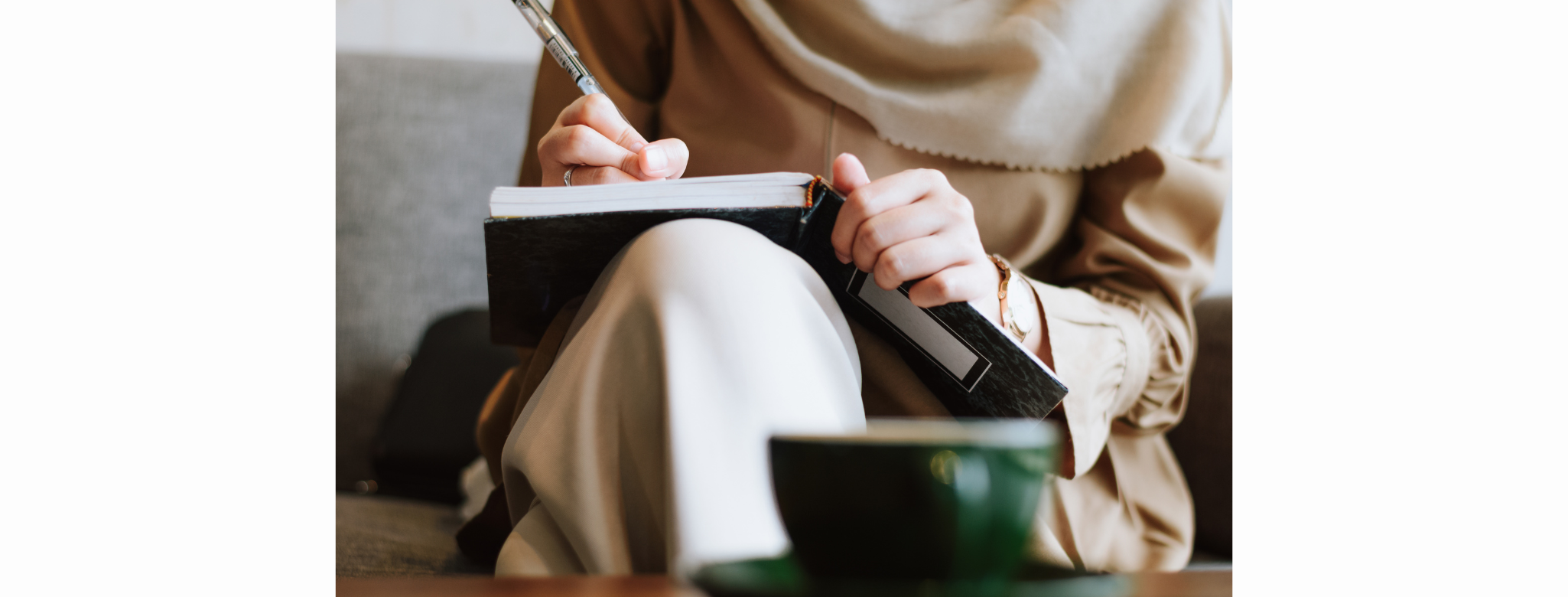
A ritual is different from a habit in one important way: it carries meaning, not just function. Brushing your teeth is a habit. Making a cup of coffee in silence before anyone else wakes up, on purpose, as a moment that belongs only to you, is a ritual.
Here are a few ways this can look depending on your transition:
If your kids are heading back to school: Choose one small moment that is entirely yours once the house empties out. It could be five quiet minutes with coffee before you open your laptop, or a short walk around the block before the day officially starts. The goal isn’t productivity. The goal is a clean handoff between mom-mode and whatever comes next.
If you’re starting a new job: Build a tiny ritual around the transition from home to work, even if that transition is just walking from your bedroom to your home office. Play the same song. Say the same sentence to yourself. Give your brain a consistent signal that says, we’re switching gears now.
If you’re relocating: Pick one thing from your old routine and bring it with you on purpose. Maybe it’s the same evening walk, the same Sunday meal prep hour, the same bedtime wind-down. Familiar rituals give your nervous system something steady to hold onto while everything else is new.
If it’s simply the season changing: Let your ritual mirror the season itself. A warmer breakfast instead of a cold one. Lighting a candle in the evening instead of just flipping a switch. Small, sensory cues tell your body it’s allowed to shift its energy too.
The Bigger Point
None of these rituals need to be elaborate. In fact, the smaller and more repeatable they are, the more likely they are to stick. What matters is that you choose them on purpose, instead of letting the season simply happen to you.
Transitions are disorienting by nature. A ritual, even a two minute one, gives you something solid to stand on while everything else is shifting around you. It’s not about controlling the chaos of a new season. It’s about giving yourself one small, steady thing that belongs to you inside of it.
So as the school buses start running, the job orientation gets scheduled, the moving boxes get packed, or the mornings simply start feeling a little cooler, ask yourself one question: what is the one small ritual I want to carry with me into this next season?
You don’t need to overhaul your life to answer it. You just need to choose something small enough to actually keep.
If you’re looking for a simple, no-pressure way to build small rituals that actually stick, come check out The 2% Club. It’s a wellness accountability membership built around one core idea: you only need about 2% of your day, roughly 28 minutes, to change your health, your energy, and your family’s culture. Each week you get one small focus, a busy-week version of it, and a community of moms doing the same thing alongside you. Right now you can try it free, no credit card required, and see if it’s the steady thing you’ve been looking for this season.
Check out all the detail HERE
About Sarah Parise. Sarah is an ACE Certified Personal Trainer and Wellness Coach with over 20 years of experience. She helps busy moms prioritize their own health using just 2% of their day, creating practical, sustainable routines that work in the real world.
Spread the word
Medical Disclaimer: All content found on the HER Health Collective Website was created for informational purposes only and are the opinions of the HER Health Collective experts and professional contributors. The Content is not intended to be a substitute for professional medical advice, diagnosis, or treatment. Always seek the advice of your physician or other qualified health providers with any questions you may have regarding a medical condition. Never disregard professional medical advice or delay in seeking it because of something you have read on this Website. If you think you may have a medical emergency, call your doctor, go to the emergency department, or call 911 immediately.
